
Exploring Opportunities in the Gen AI value chain

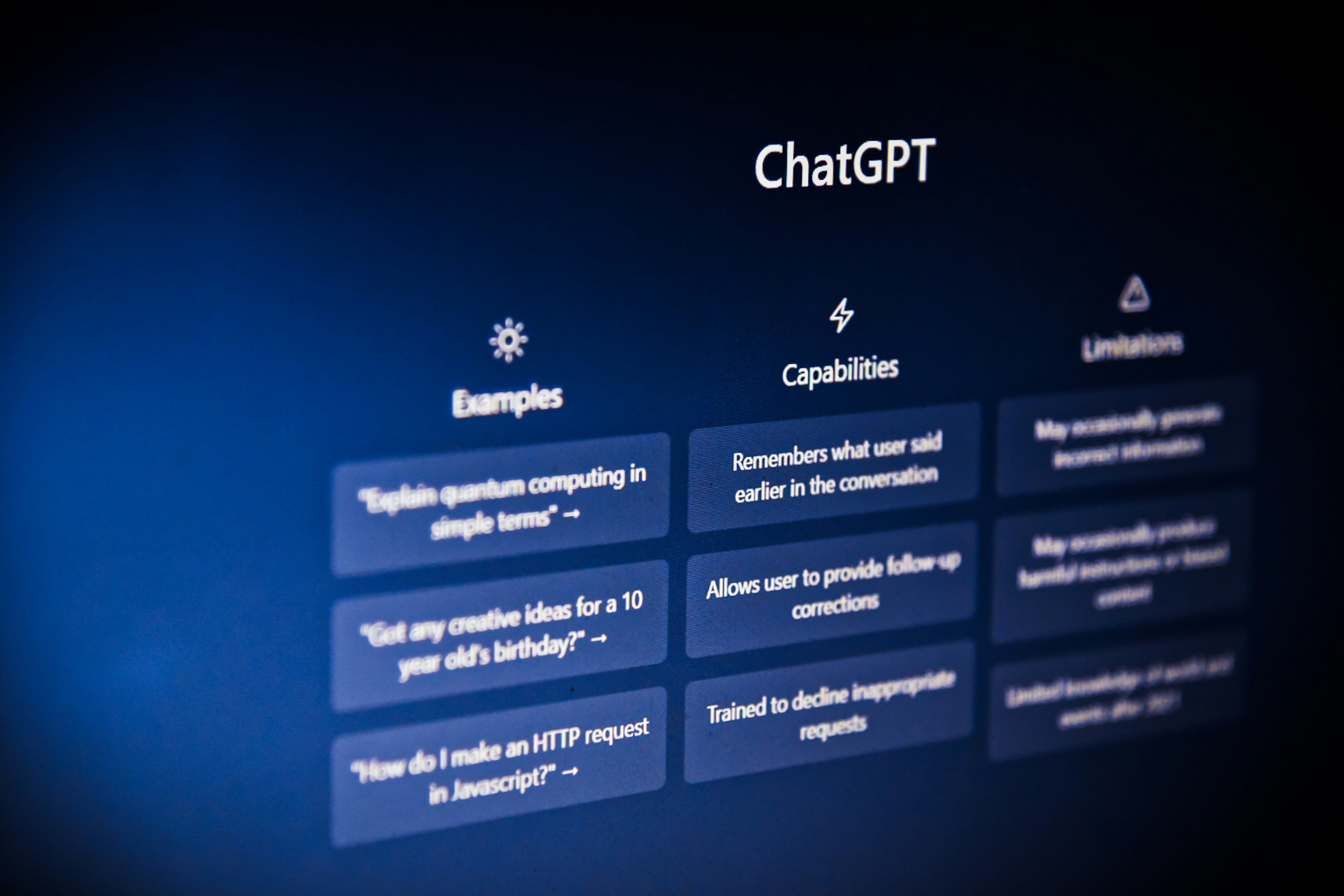
Generative AI has ignited a new technological arms race, creating an entire ecosystem that spans from hardware providers to application builders, all focused on realizing its immense business potential. The unveiling of tools like ChatGPT and Stable Diffusion in late 2022 and early 2023 astonished leaders, investors, and the public with the technology’s ability to produce seemingly human-quality content. The rate of adoption has been unprecedented: ChatGPT reached one million users in just five days, a user base it took Apple’s iPhone more than two months, Facebook ten months, and Netflix more than three years to achieve. This rapid uptake is not mere curiosity; real-world use cases are quickly taking flight. For instance, Morgan Stanley is testing the technology to enhance financial advice by leveraging insights from over 100,000 research reports, and Salesforce has integrated it into its popular CRM platform.
The breakneck pace of development has necessitated a foundational understanding of the GenAI ecosystem’s structure, or value chain.
The Generative AI Value Chain: Six Key Links
While the generative AI value chain shares similarities with traditional AI (e.g., using hardware and cloud platforms), it includes a vital new component: foundation models. The value chain consists of six top-level categories: computer hardware, cloud platforms, foundation models, model hubs and MLOps, applications, and services.
A deeper look reveals that the complexity and cost of building the foundational systems create significant barriers to entry for new and small companies across much of the chain, suggesting tech giants will dominate many areas. However, the application market is the segment expected to expand most rapidly, offering significant value-creation opportunities for both incumbents and new entrants, particularly for companies that use specialized or proprietary data to fine-tune their offerings.
1. Computer Hardware
Generative AI demands enormous computational power. OpenAI’s GPT-3, for example, was trained on roughly 45 terabytes of text data (the equivalent of nearly one million feet of bookshelf space). This massive workload requires specialized “accelerator” chips, primarily Graphic Processing Units (GPUs) or Tensor Processing Units (TPUs), to process billions of parameters in parallel.
Design and Production: The market for designing these specialized AI processors is heavily concentrated, with NVIDIA and Google dominating chip design. Furthermore, a single player, Taiwan Semiconductor Manufacturing Company Limited (TSMC), produces almost all of the accelerator chips. High R&D costs create significant barriers for new market entrants.
2. Cloud Platforms
Due to the scarcity and expense of GPUs/TPUs, most of the work to build, tune, and run large AI models occurs in the cloud. This model allows businesses to access computational power easily and manage costs flexibly. The major cloud providers hold a competitive advantage due to their comprehensive platforms for generative AI workloads and preferential access to the specialized hardware.
3. Foundation Models
These are the large deep learning models at the core of GenAI, pretrained to create a specific type of content and adaptable for many tasks—acting like a digital “Swiss Army knife.” Examples include OpenAI’s GPT-3 and GPT-4, which produce human-quality text.
Cost and Resources: Training foundation models is incredibly expensive and time-consuming. Training GPT-3 alone is estimated to have cost between $4 million and $12 million and took months.
Market Dominance: As a result of these steep requirements, the foundation model market is currently dominated by a few tech giants and heavily backed start-ups (e.g., Cohere, Anthropic, and AI21). However, the development of smaller, more efficient models and the demand from large enterprises for proprietary, secure LLMs could open the market to more specialized entrants over time.
4. Model Hubs and MLOps
To build applications, businesses need model hubs for storage and access, along with specialized Machine Learning Operations (MLOps) tooling to adapt and deploy the models.
Closed-Source Models: For proprietary models, the developer (e.g., OpenAI) typically serves as the hub, offering access via a licensed API and sometimes providing MLOps capabilities for tuning and deployment.
Open-Source Models: For publicly available code, independent model hubs like Hugging Face and Amazon Web Services have emerged, offering model aggregation and end-to-end MLOps capabilities to help companies fine-tune and deploy models without requiring extensive in-house talent and infrastructure.

5. Applications: The Greatest Value-Creation Opportunity
Applications are built on top of foundation models to enable a specific task, such as drafting marketing emails or solving customer service issues. This segment is expected to offer the greatest potential for value creation in the near term.
Applications generally fall into two categories:
As-Is Models: Use foundation models with minimal customization, often limited to a tailored user interface or simple guidance/search index for better output.
Fine-Tuned Models (Most Attractive): Leverage models that have been fed additional relevant or proprietary data or had their parameters adjusted for a specific use case. Unlike initial training, fine-tuning requires less data, is less expensive, and can be completed in days.
This fine-tuning advantage can be achieved through:
Industry/Expert Data: Example: Harvey, an application designed to answer legal questions, was developed by feeding legal data sets into GPT-3 to produce legal documents superior to the original model’s output.
Proprietary Business Data: Companies can incorporate data from daily operations (e.g., call-center chats) to continually improve their application’s performance.
Feedback Loops: End-user rating systems (like the thumbs-up/down used by OpenAI for ChatGPT) feed output quality information back into the model, creating a virtuous cycle of improvement that builds a significant competitive advantage.
The first wave of application impact is expected to hit four main business functions:
Information Technology: Automated coders have already improved developer productivity by more than 50 percent.
Marketing and Sales: Within two years, 30 percent of all outbound marketing messages are expected to be generated with GenAI assistance.
Customer Service: Natural-sounding, personalized chatbots and virtual assistants handle inquiries and recommend resolutions.
Product Development: Shortening the drug design phase from months to weeks in life sciences by generating sequences of amino acids and DNA.
Industries expected to experience the most outsize operational efficiencies in the near term include media and entertainment (for content production and localization), banking, consumer, telecommunications, life sciences, and technology companies due to their high investment in the four core functions above.
6. Services
A dedicated services market is emerging to help companies navigate the technical complexities and fill capability gaps. This includes existing AI service providers evolving their offerings and niche players with specialized knowledge for applying GenAI to specific functions, industries (e.g., guiding pharmaceutical use for drug discovery), or capabilities (e.g., building effective feedback loops).
The core takeaway is that while the entire ecosystem is critical, the Applications link offers the most significant value-creation opportunities. Companies that can effectively harness niche or proprietary data to fine-tune foundation models are best positioned to achieve the greatest differentiation and competitive advantage in the ongoing race to market.